
Visit one
Pain
Get your nights back.
Hands-on work, positioning and Astym where it fits, so the shoulder settles enough for you to sleep.
What We Treat
Night pain that wakes you the second you roll onto it. An arm that feels weak, not just sore. Some cuffs do well with rehab and some need a surgeon. We start by finding out which yours is.
That’s the hard part done. We’ll call during business hours to lock in your time.
Prefer to call? (385) 515-4810Sound Familiar?
Two or more? Keep reading.
Why It Happens
Four small muscles wrap your shoulder and hold the ball centered in its socket. That is the rotator cuff. Most tears are not one dramatic moment. The tendon frays over years, usually the one that runs under the bony roof, and then one ordinary reach finishes what the wear started. That is why it can hurt out of nowhere and still be an old problem.
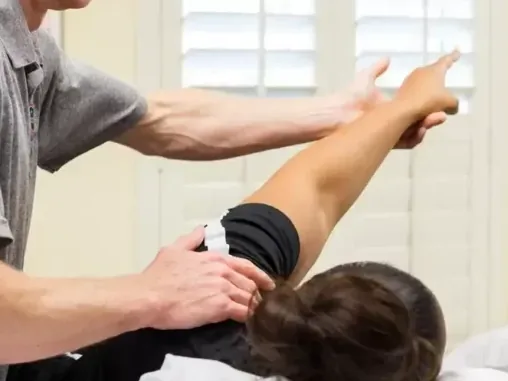
Two things matter more than the size of the tear. First, how much of the cuff still works, because a partial tear with good strength behaves nothing like an arm you cannot raise. Second, whether your shoulder blade rotates out of the way, since a blade that stays put keeps grinding the same tendon. A hands-on evaluation tests both. That is what tells us whether rehab is likely to be enough, and it is a conversation we have with you honestly.
The Honest Truth
Nobody regrets starting too early.
How We Fix It
You are the one who carries the coolers, the ladders and the grandkids. A cuff has a way of ending that quietly. Here is what the four phases look like for a rotator cuff, repaired or not.
Visit one
Pain
Hands-on work, positioning and Astym where it fits, so the shoulder settles enough for you to sleep.
First weeks
Prime
Range comes back in the directions the tendon tolerates, and we protect the ones it does not.
Next weeks
Perform
Progressive cuff and shoulder blade loading, with blood flow restriction when heavy weight is still off the table.
Ongoing
Prevent
Carrying, reaching and lifting get tested under real load before we call it done. That is the endpoint.
Pain can often be a part of life so if you have had surgery or are in need of any type of physical therapy I can definitely recommend Rock Run. My experience at their Roy location has been very positive. Josh and all the therapists there are very professional and caring and I have seen improvement already with the treatment I am receiving for a rotator cuff injury.
Eileen G. · Rotator cuff injury · Roy
Questions, Answered
No, and the size of the tear is not the only thing that decides it. Many partial tears do well once the rest of the cuff and the shoulder blade are strong enough to cover the work. A large tear in a young, active shoulder is a different conversation, and so is an arm you cannot raise at all. We test what still works and tell you honestly what we think, including when you should see a surgeon.
Not when the load is dosed for the tissue you actually have. We pick directions and weights your tendon tolerates, then add a little at a time. Soreness that settles by the next day is normal. Sharp pain, or a shoulder that feels weaker afterwards, is not. Say something and it changes that visit, because somebody is with you the whole session.
As soon as your surgeon clears it, and the protocol matters more than your enthusiasm. Early on we protect the repair and move the joint for you. Then range, then strength, in the order a healing tendon allows. We work from your surgeon’s timeline and stay just behind it on purpose. Bring your paperwork to the first visit and we will build the plan around it.
Longer than a strain, and we will not pretend otherwise. Tendon needs time to rebuild, so the Perform phase carries most of the work here. You still get a plan with an endpoint: four phases, Pain, Prime, Perform and Prevent, each with a job and a checkpoint you can see. You will know where you are the whole way through.
Book Your Visit
Request a time and our team will call you to confirm it. No phone tree. Just a plan.
4.9 · 400+ Google reviews
Step 1 of 5
That’s the hard part done. We’ll call during business hours to lock in your time.
Visit Us