
Visit one
Pain
Calm it down and unload it.
Hands-on work and swelling control take the edge off, so the joint stops guarding every step you take.
What We Treat
The ankle you rolled two summers ago and never quite trusted again. The curb you still step off sideways. That’s fixable, and it starts with a cause-first evaluation, not another brace.
That’s the hard part done. We’ll call during business hours to lock in your time.
Prefer to call? (385) 515-4810Sound Familiar?
Two or more? Keep reading.
Why It Happens
A rolled ankle stretches the ligaments on the outside of the joint. Those knit back together in weeks. Three other things usually don’t. The tiny position sensors inside the joint get dulled, so the ankle reacts a beat late on uneven ground. The calf tightens and loses its spring, which loads the heel and Achilles harder every step. And the hip above quietly stops helping, so the foot absorbs what the hip should have.
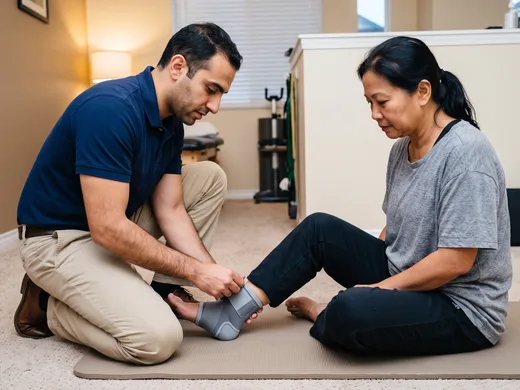
You’re the type who walks it off. That’s exactly why nobody ever checked those three things, and exactly why you’re reading this. A cause-first evaluation tests the joint, the tendon, the calf and the way you land, one-on-one with a licensed physical therapist or physical therapist assistant, every visit. Find what’s actually failing and the plan writes itself.
The Honest Truth
Nobody regrets starting too early.
How We Fix It
Every plan has an endpoint. Here’s what the four phases look like for a foot or ankle.
Visit one
Pain
Hands-on work and swelling control take the edge off, so the joint stops guarding every step you take.
First weeks
Prime
Ankle and calf mobility come first. A stiff ankle makes the foot and knee do work they were never built for.
Next weeks
Perform
Balance and calf strength retrain the position sense a sprain dulls, so the ankle reacts before you think about it.
Ongoing
Prevent
Curbs, ladders, gravel and cutting get tested with somebody watching, so nobody is guessing when you’re cleared.
I love coming to the Layton Rock Run PT, they have been so helpful with my ankle injury. Every time I come in they remember who I am and treat me like a friend! Their coordination is very sweet and has been so helpful handling my insurance and working with my injury lawyer.…
Shared by Jena G. · Ankle injury, Layton
Questions, Answered
Usually not first. If anything in your exam suggests a fracture, we say so and help you get imaging, and Utah is a direct-access state, so nothing has to wait on a referral. Most sprains and Achilles pain get sorted out by hand: what is tender, what is stiff, what gives way under load. You do not need a picture to start feeling better.
In most cases movement helps more than rest does. An ankle does not get stronger by being avoided, and protected loading is what rebuilds a tendon and retrains balance. The line between helpful and too much is specific to your ankle. That is what a licensed physical therapist sets at your evaluation, then moves as you improve.
You get an answer at the end of your evaluation, not a shrug. Your plan runs through four phases, Pain, Prime, Perform and Prevent, and each one has a job and a way to know you have earned the next. That is a plan with an endpoint, not an open tab of appointments.
No, and it is one of the most common stories we hear. An old sprain usually leaves behind a stiff ankle, a lazy calf and dulled position sense, and all three still respond to training. Many people find out at their first visit that the ankle was never really rehabbed, only rested.
Book Your Visit
Request a time and our team will call you to confirm it. No phone tree. Just a plan.
4.9 · 400+ Google reviews
Step 1 of 5
That’s the hard part done. We’ll call during business hours to lock in your time.
Visit Us